Uneven or Sunken Concrete
Concrete Leveling in Kalamazoo MI
A sidewalk panel that has dropped or a patio section that sits lower than the rest can create a trip point and an uneven look. Concrete Leveling in Kalamazoo MI starts with finding out whether your settled concrete is a good candidate for lifting.
What You May Notice
Is Your Concrete Uneven or Sunken?
These are observations, not diagnoses. They show where an elevation difference exists, but not why it happened. A note of when you first noticed the change can help during an evaluation.
Sunken Sections
One slab or panel sitting lower than the next, often at a joint, is one of the most common signs of concrete settlement.
Uneven Walkways and Sidewalks
Raised or dropped edges between sidewalk panels can create trip points and make walking less comfortable.
Settled Patios and Driveways
Sections that have tipped or dropped can change how a patio or driveway looks, feels underfoot and meets the house or garage.
Water in New Low Spots
Water collecting where it did not before can point to a changed low area that is worth noting.
Possible Causes
Why Concrete Can Become Uneven
Concrete is usually only as level as the ground below it. Over time, changes beneath a slab, such as settling soil, erosion or a void beneath the concrete, can let a section drop. Subgrade and site conditions vary from property to property.
Drainage and moisture often play a role. Water that runs under slabs or collects along edges can affect the soil beneath them, and freeze-thaw cycles can add seasonal movement in Michigan.
No single cause fits every project. Why a slab settled matters, because lifting the concrete without considering the cause may not hold up over time. A careful look at drainage, edges and nearby slabs helps explain what is happening.
Evaluation
Is Leveling Right for Your Slab?
1 →
Elevation Difference
Where the slab has dropped and how much it differs from nearby sections.
2 →
Slab Condition
Whether the concrete is still in one piece and sound enough to be lifted.
3 →
Type of Movement
Whether settlement appears to be the main issue or something else is involved.
4 →
Site and Drainage
How water, soil and surrounding conditions may affect the result.
5
Best Approach
Choose leveling, repair, replacement or a combination that fits the condition.
Common leveling methods include slabjacking, often called mudjacking, which places a cement-based material beneath the slab to raise it, and polyurethane foam lifting, which uses an expanding foam. Both work through small openings in the slab, and the right method depends on the slab, the site and the project. Neither method is a do-it-yourself project. Our article on the difference between mudjacking and foam leveling compares them at a high level.
Weighing Options
Leveling, Repair, Resurfacing or Replacement?
Concrete leveling focuses on elevation. It can raise suitable settled concrete, but it does not fix every concrete problem.
When Leveling May Fit
Leveling may be considered when the concrete is still sound, settlement is the main concern and site conditions allow lifting. Sidewalks, walkways, patios, driveway sections and some slabs are common candidates. The goal is a smoother, safer transition between sections.
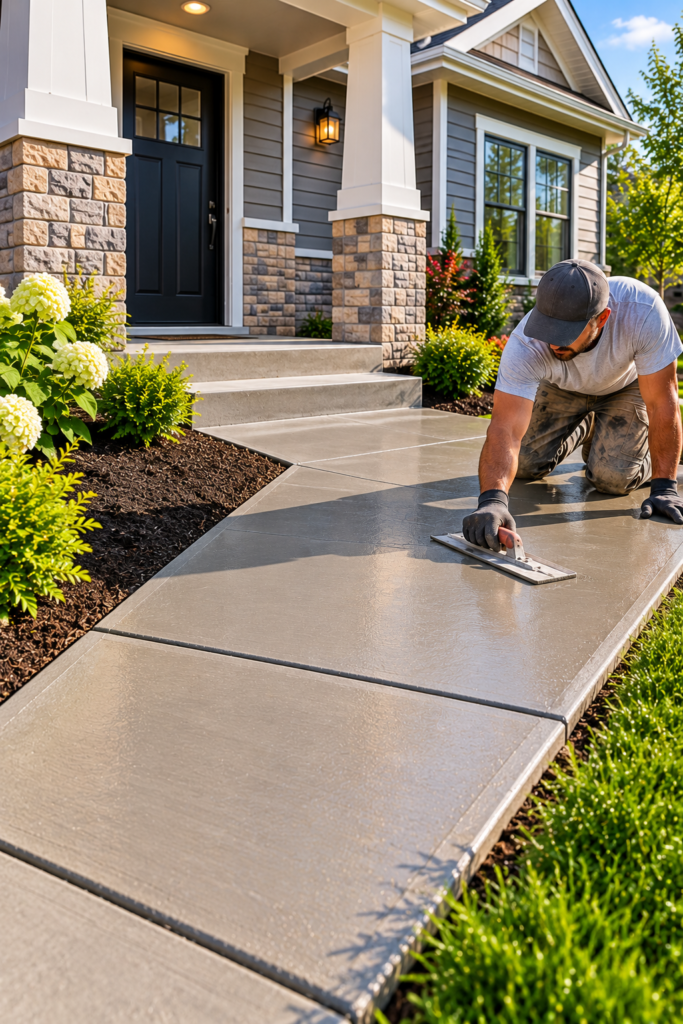
When Another Approach May Be Needed
Extensive cracking, broken or crumbling concrete, or problems beyond a simple height difference may call for concrete repair or replacement instead. Resurfacing renews the surface but does not raise sunken concrete, and slab leveling is not a substitute for foundation repair.
As a concrete contractor serving Kalamazoo, we can look at your uneven concrete and explain which approach makes sense for Concrete Leveling in Kalamazoo MI.
Local Conditions
Michigan Weather and Settled Concrete
Kalamazoo’s cold winters, warm summers, rain and snow all affect outdoor concrete. Moisture in the soil, freezing and thawing, and snowmelt along slab edges can contribute to movement over time.
Seasonal changes do not explain every sunken slab, but they are part of the picture. Joints, edges and places where water collects deserve a closer look. Downspouts, slopes and gaps along slab edges can all affect where water goes.
Weather and soil moisture at the time of the work can also affect leveling, so timing and site conditions are part of the plan.
Pricing
What Affects a Concrete Leveling Estimate?
Area and Number of Slabs
How many sections need lifting and their total size.
Elevation Difference
How far each section has dropped.
Concrete Condition
Whether slabs are sound enough to lift or need repair first.
Leveling Method
The approach that suits the slab and the site.
Access
How easily equipment can reach the affected area.
Drainage and Site Conditions
Water or soil issues that may need attention too.
Project complexity also affects scope, so we provide a project-specific estimate rather than quoting averages or square-foot figures. Sharing photos and the location of uneven areas helps us prepare.
Dealing With Uneven or Sunken Concrete?
Tell us where the uneven concrete is, the approximate size of the area, where the height differences show, whether they seem to be changing and any drainage concerns.
FAQ
Concrete Leveling FAQs
What is concrete leveling?
It is raising suitable settled or sunken concrete back toward its intended position, usually by filling space beneath the slab with a cement-based material or foam.
What causes concrete to become uneven?
Common factors include changes in the soil beneath the slab, erosion, moisture, drainage and freeze-thaw movement. The cause varies by site. An on-site look helps narrow it down.
Can all sunken concrete be leveled?
No. Slabs that are badly cracked, broken or crumbling, or that have problems beyond settlement, may need repair or replacement instead. Our article on whether cracked concrete can be leveled covers when it may still work.
What concrete surfaces can be leveled?
Sidewalks, walkways, patios, driveway sections and some other slabs may be candidates, depending on their condition and the site.
Is concrete leveling the same as resurfacing?
No. Leveling addresses elevation. Resurfacing renews the surface of sound concrete and does not raise sunken slabs.
How long does concrete leveling last?
It depends on the slab, the method and whether conditions like drainage are addressed. If the cause continues, settling can happen again. We explain more in how long concrete leveling lasts.
Free Estimates
Request a Concrete Leveling Estimate
Have a sunken sidewalk, uneven walkway or settled patio? Call (269) 404-2457 or contact us to talk through whether leveling fits your concrete.