
Concrete Driveways
Concrete Driveway in Kalamazoo MI
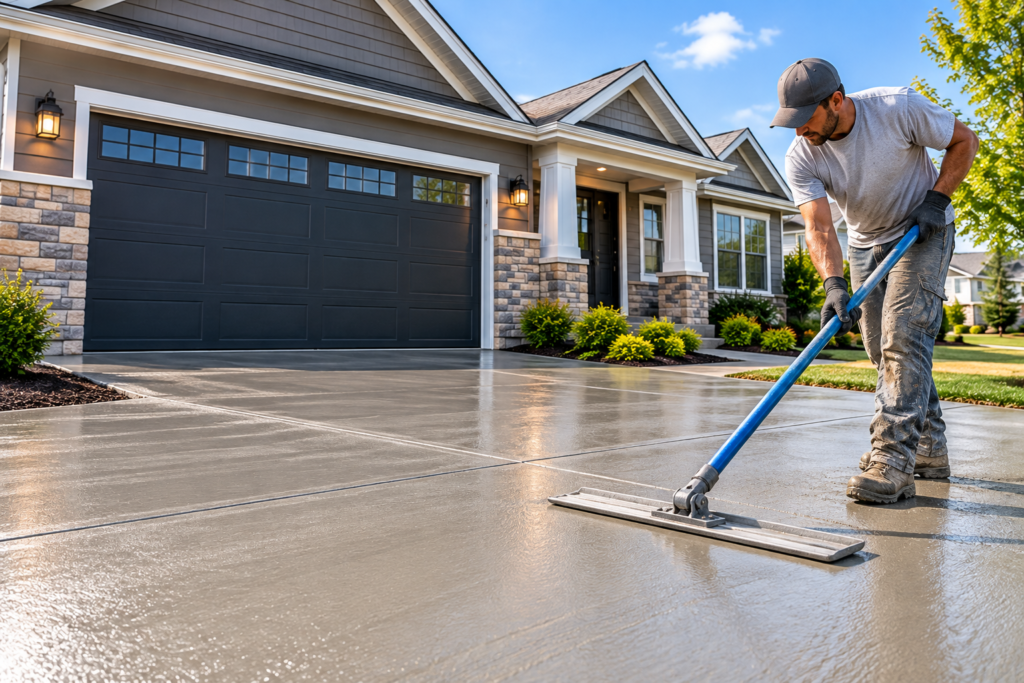
Your driveway handles daily trips, parking and visitors in every season. A concrete driveway in Kalamazoo MI should be planned around how you use your property, the shape of the site and where water goes. We help homeowners plan new and replacement driveways that fit.
Planning
Planning a Driveway Around Your Property
A good driveway starts with how you get on and off your property. How many vehicles park there? Do you need room to turn around or park a trailer? Does it connect to a garage, a walkway or the street?
Available space, dimensions and how the driveway meets existing surfaces all shape the plan. Working with experienced Kalamazoo concrete contractors helps fit the layout to your property instead of forcing a standard design onto it.
Inside the City of Kalamazoo, the city sets residential driveway standards, such as width ranges and front-yard coverage limits, and requires a paving permit. Review the City of Kalamazoo residential driveway and parking standards before finalizing a layout.
Before the Pour
What Matters Before the Concrete Is Placed?
Use
Everyday cars and heavier vehicles create different demands that guide thickness, reinforcement and joint decisions.
Site
Existing ground, slopes, trees and nearby structures affect the layout and the work needed to prepare the area.
Drainage
Where the site allows, water should be directed away from the house and garage rather than toward them.
Preparation
The subgrade and base need to give the concrete even, stable support across the whole driveway.
How It Comes Together
From Property Access to Finished Driveway
Every driveway is different, but most projects follow a similar general rhythm.
01
Layout
Confirm size, shape and connections to the street, garage and walkways.
02
Grade and Prepare
Shape the grade and prepare a stable base.
03
Form and Place
Set forms along the edges and place the concrete.
04
Finish and Joint
Finish the surface and add control joints.
05
Cure
Protect the new driveway while it gains strength.
Finish and Appearance
Most driveways use a practical textured finish for traction. Edges, joint placement and how the driveway meets the lawn, walkway and street shape the final look. Decorative options suit some projects, but the finish should still work for vehicles and winter use.
Why Driveways Have Joints
Concrete shrinks and moves slightly as it cures and as temperatures change. Control joints give cracks a planned place to form. They help manage cracking but do not prevent all of it, and their layout depends on the driveway's size and shape.
Water Management
Drainage and Grading Matter
Driveways cover a large area and shed a lot of rain and snowmelt, so planning where that water goes is one of the most important parts of the project.
The driveway should be planned together with the house, garage, surrounding grade and nearby surfaces. Usually the goal is to keep water from pooling on the concrete or running toward the foundation. The right slope depends on the site, so no single number fits every property.
Standing water on or along a driveway can add stress to the concrete over time, especially when it freezes.
Kalamazoo Weather
Built for Outdoor Exposure in Michigan
Freeze-Thaw Cycles
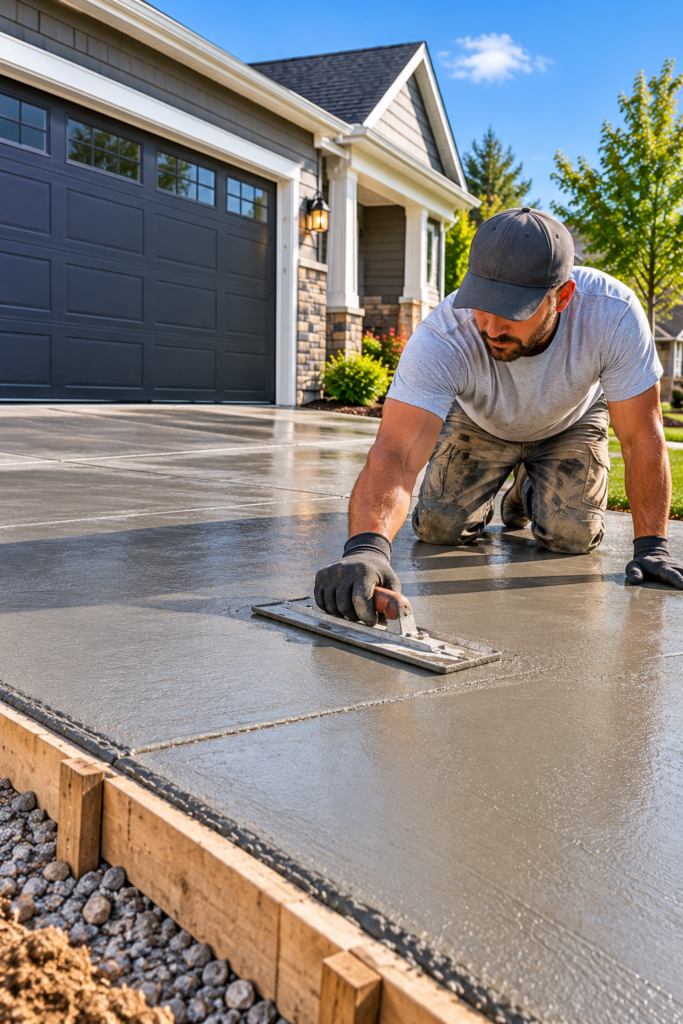
Kalamazoo winters bring repeated freezing and thawing. Water that soaks into concrete and freezes can expand and wear on the surface over time. These conditions play a big part in how long a concrete driveway lasts in Michigan.
Snow and Ice
Plowing, shoveling and deicers are part of winter driveway use. Some deicers are harder on concrete than others, especially on newer surfaces, so ask what suits your driveway.
Seasonal Timing
Temperature and rain affect when concrete can be placed and how it cures. Cold-weather work may need extra planning so fresh concrete does not freeze.
Caring for a Concrete Driveway
Keep the surface reasonably clean, watch for cracks and open joints, and notice where water collects. Dealing with small problems early can keep them from spreading, though no routine prevents every crack. Cracking, settlement or surface wear may be worth having evaluated.
Your Starting Point
New Driveway or Replacement?
New Driveway
Planning a driveway where one has not existed, or where a new layout is planned, starts with access, size, grading and site preparation.
Replacing an Existing Driveway
When an old driveway is no longer suitable, the existing material is removed and the area beneath is reviewed and prepared before new concrete goes in. Our concrete replacement page explains that process in more detail.
Pricing
What Affects Your Driveway Estimate?
Driveway Size and Shape
The overall area, width and any curves or turnarounds.
Existing Driveway Removal
Whether old concrete or asphalt must be removed first.
Site Access
How easily equipment can reach the work area.
Grading and Drainage
Work needed to manage water and shape the grade.
Site Preparation
Base work needed for even, stable support.
Vehicle Use
The types of vehicles the driveway must handle.
Finish and Edges
Surface texture, edge details and any decorative work.
Surrounding Surfaces
Connections to the street, garage, walkways and lawn.
Every driveway is different, so the clearest way to understand the cost of a concrete driveway in Kalamazoo MI is a project-specific estimate.
Planning a New Driveway?
Tell us how you use your property. We'll talk through layout, drainage and next steps.
FAQ
Concrete Driveway FAQs
How long does a concrete driveway project take?
It depends on the driveway size, whether an old driveway must be removed, site preparation and the weather. A schedule can be discussed with your estimate.
When can I drive on a new concrete driveway?
Concrete needs time to gain strength before it carries vehicles, and foot traffic usually comes first. Timing depends on the mix, temperatures and how the driveway will be used. Our article on how soon you can drive on a new concrete driveway explains the stages in more detail.
How thick should a concrete driveway be?
There is no single answer. Thickness, reinforcement and base preparation depend on the vehicles using the driveway, the site conditions and the project specifications.
Does a concrete driveway need joints?
Most concrete driveways include control joints. They help manage where cracks form as concrete shrinks and moves, though they cannot stop all cracking.
Can an asphalt or old concrete driveway be replaced with concrete?
Often, yes. The old material is removed, the area beneath is reviewed and prepared, and the new driveway is planned around drainage and use. If you are still comparing materials, our article on concrete vs. asphalt driveways in Michigan may help.
Do I need a permit for a driveway in Kalamazoo?
Inside the City of Kalamazoo, a paving permit is required for installing driveways, and work in the public right-of-way needs a separate permit. Other communities may differ, so check locally.
Free Estimates
Request a Concrete Driveway Estimate
Ready to plan a new or replacement driveway? Call (269) 404-2457 or contact us to discuss size, use, the existing site and access, and request a free estimate.