
Garage Floors
Concrete Garage Floor in Kalamazoo MI
Your garage floor carries cars, storage and daily foot traffic, and in Michigan it also takes on snow, slush and road salt tracked in all winter. Planning a Concrete Garage Floor in Kalamazoo MI means looking at how the garage is used, how water moves at the entrance and the condition of any existing slab. We help homeowners plan new garage floors and evaluate existing floors that are cracked, pitted or uneven.
The Basics
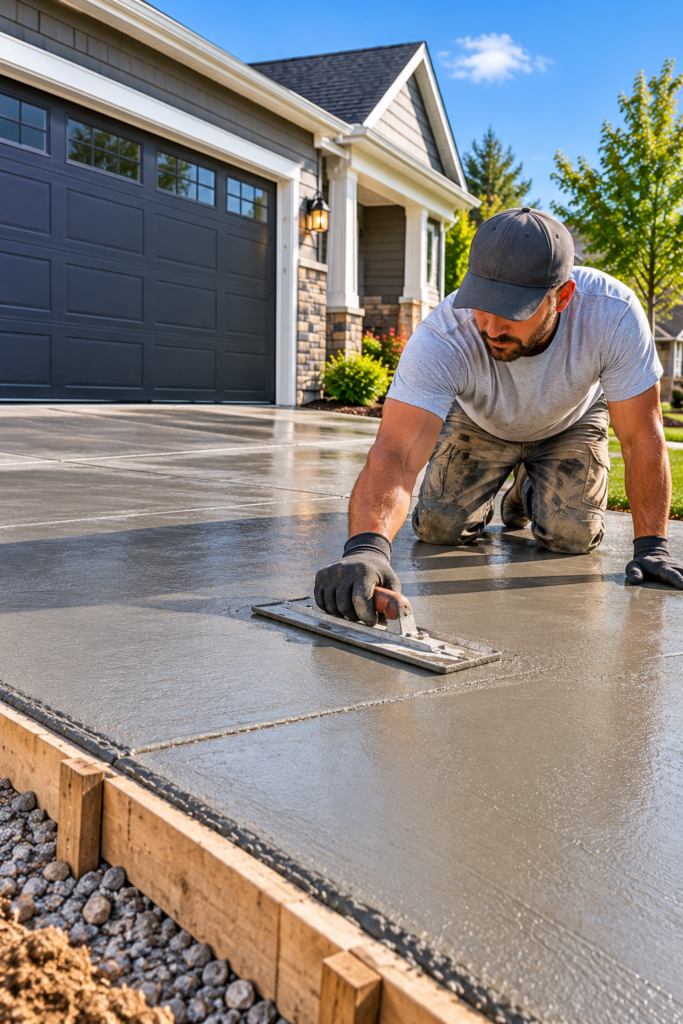
What a Concrete Garage Floor Involves
A concrete garage floor is the slab inside your garage. It supports parked vehicles, storage and everyday use, and it meets the driveway at the garage door. Because it sits indoors but connects to the outdoors, it handles both daily wear and winter moisture.
Planning looks at the inside of the garage and the entrance together, since both affect how the floor performs over time.
As a local concrete contractor, we look at the garage, the entrance and the driveway together before recommending an approach.
Planning
Planning a New Garage Floor
Garage Use
Passenger vehicles, storage, a workbench or hobbies can each affect how the floor is planned.
Size and Access
The floor area and how easily equipment and materials can reach the garage help shape the project.
Site and Base
The ground beneath the floor and the existing site conditions are reviewed before any concrete is placed.
Moisture and Drainage
Melting snow, rain at the door and the surrounding grade all matter for a garage floor.
The Entrance
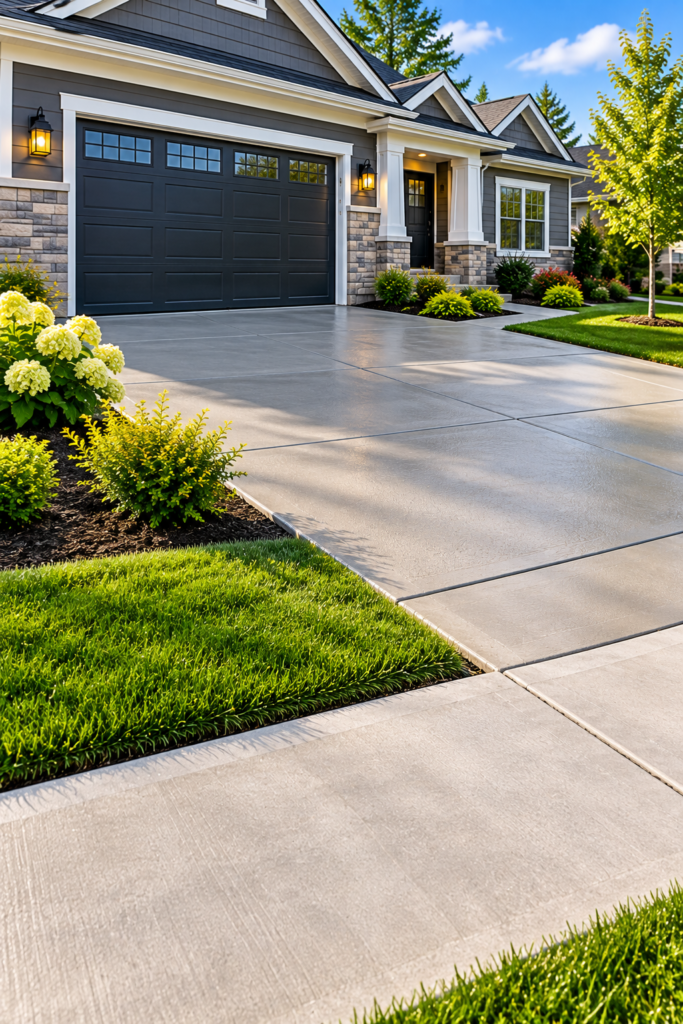
Where the Garage Meets the Driveway
The garage door opening is where indoor and outdoor concrete meet. Exact slopes and details depend on the garage, the driveway and the site, so they are worked out during planning.
Elevation and Transition
The height of the garage floor compared with the driveway affects how vehicles roll in. A smooth surface transition between the two helps with everyday use.
Drainage and Freeze-Thaw
Rain and melting snow collect at the entrance, and concrete there sees more freezing and thawing than the interior floor. Planning helps direct water away from the garage where the site allows.
Existing Floors
What Is Your Garage Floor Showing?
Over time, a garage floor may show cracks, pitting, scaling, spalling, chipped areas, discoloration or worn spots.
Some floors develop uneven sections, damp areas or extra wear near the garage door.
These are observations, not diagnoses. The cause of any one sign depends on the floor, the base and the site, so it should be checked in person.
Your Options
Repair, Resurfacing or Replacement?
A repair may address localized damage, such as a chipped area or a single crack, where the condition allows. No single crack size decides the answer.
Resurfacing may renew the surface of a floor that is otherwise stable. It does not correct settlement, movement or base problems.
Replacement may be considered when the existing floor is not suitable for how you want to use the garage. Our concrete repair page explains how we look at damaged concrete in general.
Local Conditions
Michigan Winters and Your Garage Floor
Road Salt and Deicers
Salt and deicing materials tracked in on tires stay on the floor as the snow melts. Cleaning up melted slush is part of winter maintenance. Our article on how road salt affects a concrete garage floor explains what helps.
Moisture
Melting snow can leave standing water on the floor, especially near the door. Keeping water from sitting for long periods can help.
Freeze-Thaw at the Entrance
Concrete at the garage entrance faces repeated freezing and thawing, which can affect the surface over time.
Caring for a Garage Floor
Cleaning up slush, sweeping out grit and watching for new cracks or pitting each spring are simple habits that help. The National Ready Mixed Concrete Association’s guide to scaling concrete surfaces explains how freezing and deicing chemicals can affect concrete.
Everyday Use
Vehicle Use, Finish and Joints
Most residential garage floors support passenger vehicles, storage and normal garage use. A floor for two family cars, a workshop or extra storage may call for different planning, and the actual design depends on intended use and project conditions.
The finish should balance traction, cleaning, appearance and maintenance. No concrete finish is slip-proof or stain-proof. Some owners later consider coatings or other surface treatments, which are separate from the concrete itself.
Joints are planned as part of the slab design, and their layout depends on the size and shape of the floor.
Pricing
What Affects a Concrete Garage Floor Estimate?
Garage Size
The overall floor area and shape of the garage.
New or Existing Floor
Building a new floor differs from working on an existing one.
Repair, Resurfacing or Replacement
Each option involves different work and materials.
Removal Needs
Taking out an old floor adds demolition and hauling.
Site Preparation
Base work needed under a new or replacement floor.
Intended Use
The vehicles, storage and activities the floor will handle.
Drainage and Moisture
Work needed to manage water at the entrance.
Finish and Access
The chosen finish and how easily the garage can be reached.
Every garage is different, so pricing comes from a project-specific estimate.
Thinking About Your Garage Floor?
Tell us about your garage and what you would like to change.
FAQ
Concrete Garage Floor FAQs
What should I consider when planning a concrete garage floor?
Think about how the garage will be used, the vehicles and storage it will hold, the site and base conditions, drainage and how the floor meets the driveway. Finish and joint planning are part of the design too.
Can cracks in a concrete garage floor be repaired?
Often, depending on the type and extent of the cracking and whether the floor has moved. Some cracks can be repaired; others may call for a larger project.
Can an existing garage floor be resurfaced?
It may be, if the existing floor is stable and the problems are mainly on the surface. Resurfacing does not fix settlement, movement or base problems.
When should a concrete garage floor be replaced?
Replacement may be considered when damage is widespread, sections have shifted or settled, or the existing floor no longer suits how you use the garage. Our comparison of repairing, resurfacing or replacing a garage floor can help you weigh the options.
Can road salt affect garage concrete?
Salt and other deicing materials tracked in on vehicles can add to surface wear over time, especially along with moisture and freezing. Cleaning up melted slush during winter can help.
How does the garage floor connect to the driveway?
The two meet at the garage door. Their elevation, drainage and surface transition should be planned together so vehicles roll in smoothly and water is directed away where the site allows. We cover gaps between a garage floor and driveway in a separate article.
Free Estimates
Request a Concrete Garage Floor Estimate
Tell us whether this is a new or existing garage floor, the approximate garage size and the floor’s current condition. Share how you use the garage, any drainage or moisture concerns, how the floor meets the driveway, the finish you want and your project goals. Call (269) 404-2457 or use our contact page.