
Concrete Sidewalks
Concrete Sidewalk in Kalamazoo MI
A good sidewalk gets people where they need to go, from the parking area to the front door or from one part of a property to another. A concrete sidewalk in Kalamazoo MI should be planned around how people move across the property, the surfaces it connects and year-round outdoor exposure.
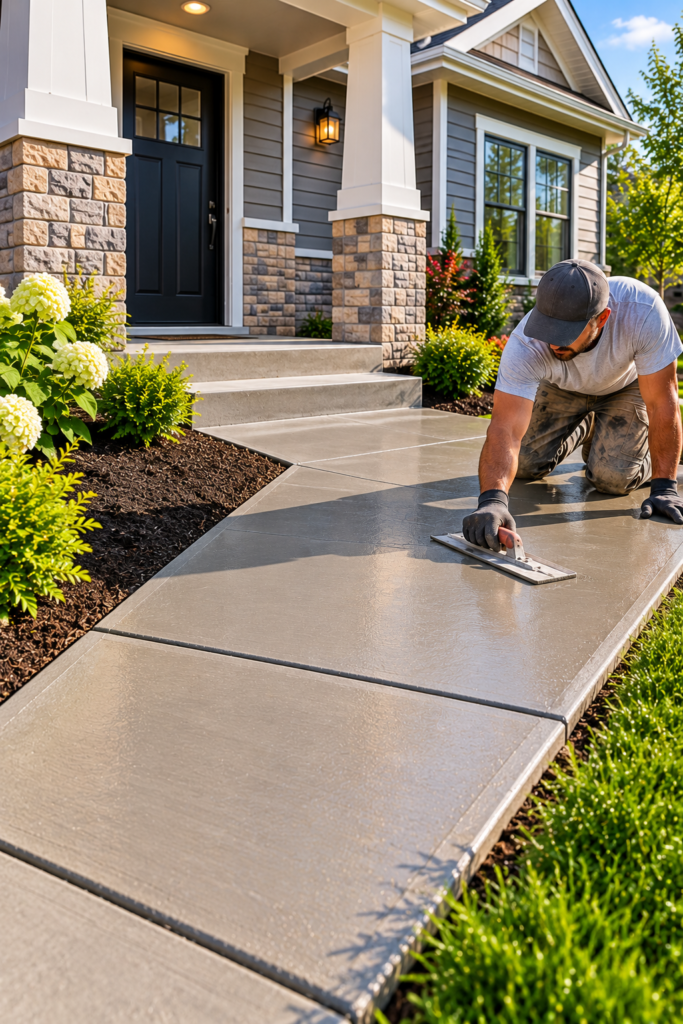
Pedestrian Access
Where Does the Sidewalk Need to Take You?
Every sidewalk starts with a simple question: where do people need to walk? Think about where the route begins, where it ends, who will use it and which existing surfaces it must meet.
Entrance
Front doors, side doors and steps where people enter the building.
Driveway
A safe connection from parked cars to the house.
Parking
Routes from a parking area to a business or shared entrance.
Patio
A link between outdoor living space and the rest of the property.
Route Planning
Plan the Route Before the Concrete
Once the start and end points are clear, the route can be laid out. A sidewalk tends to work well when it follows the way people naturally walk.
Start →
Where people step onto the sidewalk, such as a driveway edge or parking area.
Path →
The route itself, shaped around buildings, landscaping, trees and the grade.
Transition →
Points where the sidewalk meets steps, driveways or other paved surfaces.
Destination
The entrance, patio or other area the route serves.
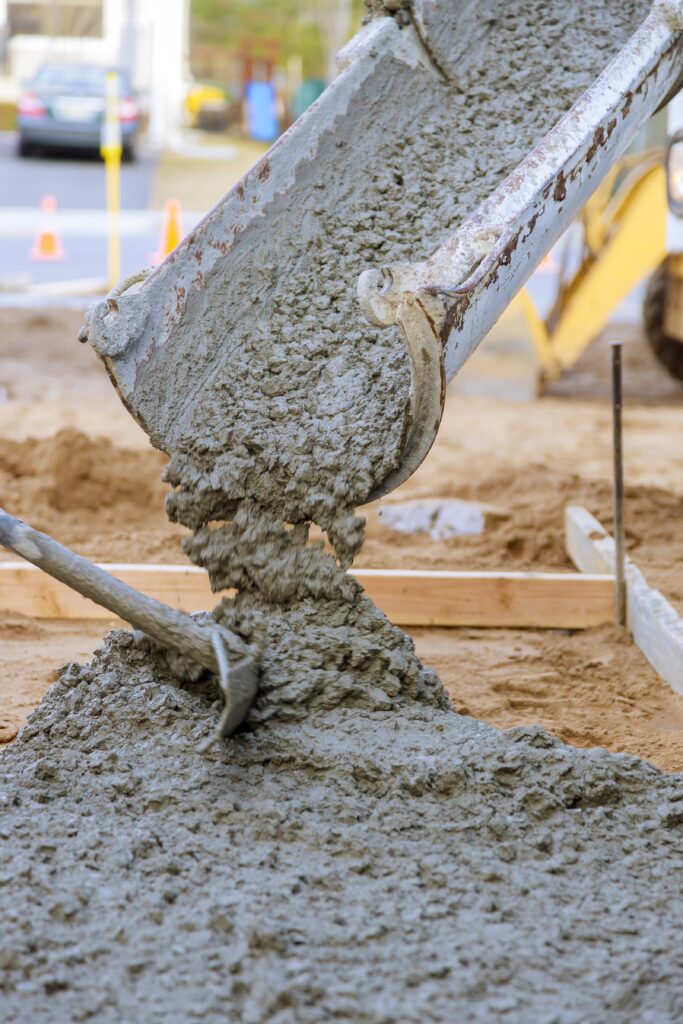
Layout also depends on the property's shape, existing concrete, access points and how people use the space. Working with experienced local concrete contractors helps turn those factors into a practical pedestrian route.
Transitions
Transitions Are Part of the Plan
Many sidewalk problems start where two surfaces meet. A sidewalk may connect to driveway edges, steps, entrances, an existing sidewalk or a patio, so each transition is planned to keep the walking surface as smooth and even as practical.
Driveway Crossings and Edges
Where a sidewalk meets or crosses a driveway, the heights and edges of both surfaces need to work together.
Steps and Entrances
Sidewalks often end at steps or a door. How the surface meets that point affects comfort and safety.
Existing Concrete
Tying into an older sidewalk or slab means matching heights and planning joints where old and new concrete meet.
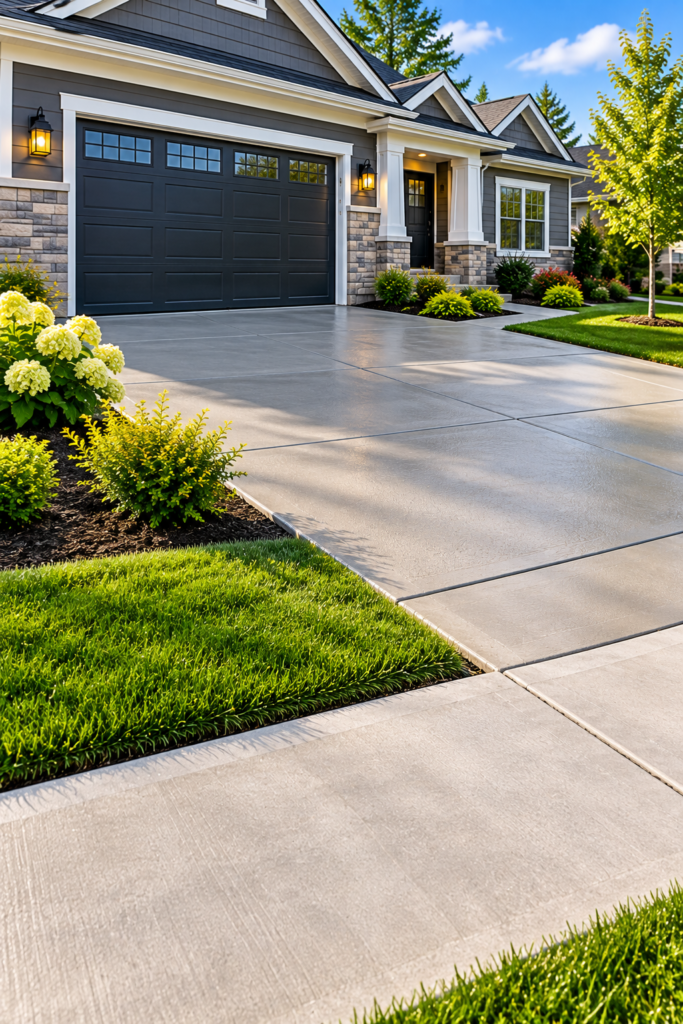
Site Conditions
Grade, Drainage and the Walking Surface
Grade
The surrounding grade shapes the route and how the sidewalk sits next to lawns, buildings and other surfaces. Changes in level along the route should be considered early.
Water
Sidewalks shed rain and snowmelt. Planning looks at where water moves, nearby structures, adjoining surfaces and low areas, so runoff moves off the path instead of pooling on it. The right slope depends on the site.
Surface
A walking surface usually needs some texture for traction, and a light broom-style finish is a common choice outdoors. Control joints help manage where cracks form as concrete moves, though they do not prevent all cracking. We compare common options in choosing a finish for a concrete sidewalk.
Accessibility Considerations
For some pedestrian routes, especially those serving the public, accessibility requirements may apply to things like route width, slope, changes in level and transitions. Which rules apply depends on the property and how the sidewalk is used, so they are confirmed for each project. Many private residential sidewalks are not governed by the same rules as public routes, but the same ideas can make any sidewalk easier to use.
Kalamazoo Weather
Outdoor Sidewalks Through Michigan Seasons
Sidewalks are outside every day of the year. In Kalamazoo, that means warm summers, cold winters, rain, snow and ice. Water that soaks into concrete and freezes expands, and repeated freeze-thaw cycles can wear on the surface over time.
Shoveling, plowing and deicing products are part of winter sidewalk use, and some deicers are harder on concrete than others. Good drainage, a suitable finish and simple sidewalk maintenance, like clearing standing water and watching for cracks or uneven sections, help a sidewalk handle the seasons. Our tips on caring for a concrete sidewalk in winter go into more detail.
Your Starting Point
New Sidewalk or Existing Concrete?
New Sidewalk
Creating a new pedestrian route starts with the layout, transitions, grade and drainage described above.
Existing Sidewalk
Older sidewalks can develop cracks, surface wear, uneven sections or settlement. Some can be repaired, while others may need to be removed and replaced. Our concrete replacement page explains what replacement involves.
If a sidewalk sits in the public right-of-way, local rules may apply. The City of Kalamazoo states that private construction in the right-of-way must be permitted, lists sidewalk repair as an example and notes that the right-of-way typically includes the sidewalk and curb lawn. See the city's right-of-way permit information for details. Our article on sidewalk permits in Kalamazoo covers this at a general level.
Pricing
What Shapes a Sidewalk Estimate?
A project-specific estimate is the clearest way to understand the cost of a concrete sidewalk in Kalamazoo MI.
✓
Sidewalk length and width
✓
Route layout and curves
✓
Site access for equipment
✓
Removal of existing concrete
✓
Site preparation
✓
Grade and drainage
✓
Transitions to steps, driveways and entrances
✓
Surface finish
✓
Applicable local requirements
FAQ
Concrete Sidewalk FAQs
What affects the cost of a concrete sidewalk?
Length, width, layout, site access, removal of old concrete, preparation, grade, drainage, transitions and finish all play a part.
How wide should a concrete sidewalk be?
It depends on who will use it and where it goes. A private path to a front door has different needs than a route serving the public, where specific requirements may apply.
Why do concrete sidewalks have joints?
Concrete shrinks and moves slightly with temperature changes. Control joints give cracks a planned place to form, though they cannot prevent all cracking.
Can an old sidewalk be replaced?
Often, yes. The existing sidewalk is evaluated, removed if it is no longer suitable, and the area is prepared for new concrete.
Do I need a permit for sidewalk work in Kalamazoo?
For sidewalks in the public right-of-way in the City of Kalamazoo, the city requires a right-of-way permit for private construction, including sidewalk repair. Rules for sidewalks on private property or in other communities may differ, so check locally.
How does Michigan weather affect a concrete sidewalk?
Freeze-thaw cycles, snow, ice and deicing products all wear on outdoor concrete. Drainage, finishing and basic upkeep help a sidewalk hold up year-round.
Free Estimates
Request a Concrete Sidewalk Estimate
Call (269) 404-2457 or contact us to talk about where the sidewalk is needed, the route, the existing site and any transitions, and request a free estimate.