Concrete Slabs and Pads
Concrete Slab in Kalamazoo MI
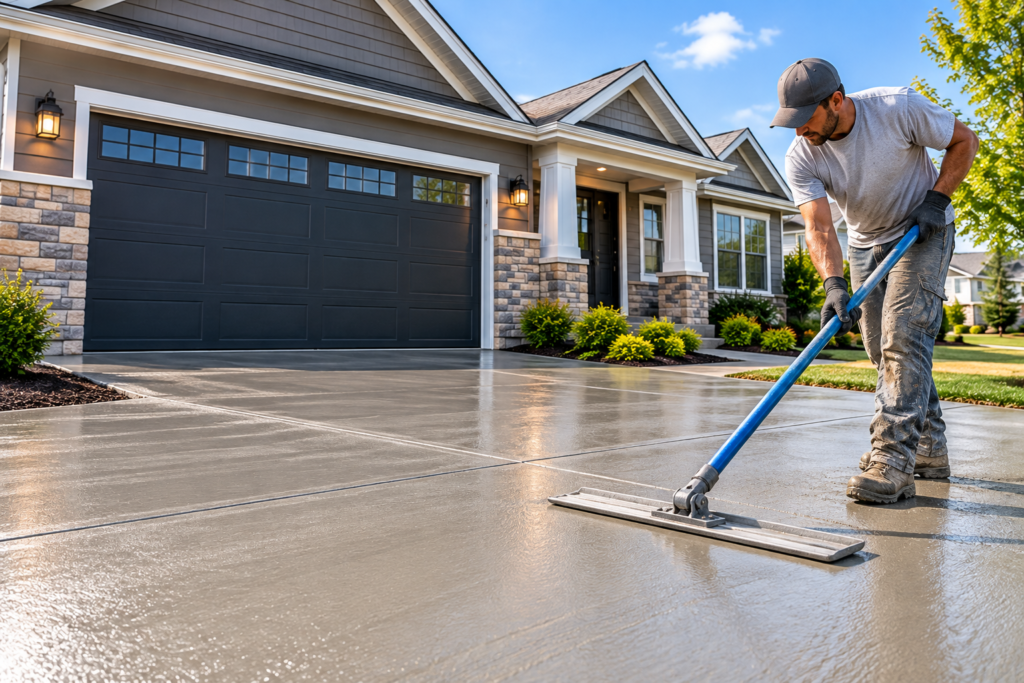
A concrete slab is only as useful as its fit for the job. A pad for a shed, a level spot for equipment and a general flat concrete surface each come with different needs. Planning a concrete slab in Kalamazoo MI starts with its intended use, then looks at location, size, site conditions, drainage and weather exposure.
Purpose First
What Will Your Concrete Slab Need to Do?
01
Intended Use
What will sit, move or operate on the slab, from foot traffic to storage or equipment.
02
Size and Space
How much usable area you need and how much clearance to leave around it.
03
Site Conditions
Layout, existing surfaces, nearby structures and how people, equipment or materials will reach the area.
04
Outdoor Exposure
Whether the slab will sit outdoors in the weather or under a roof.
Intended Use
Start With Intended Use
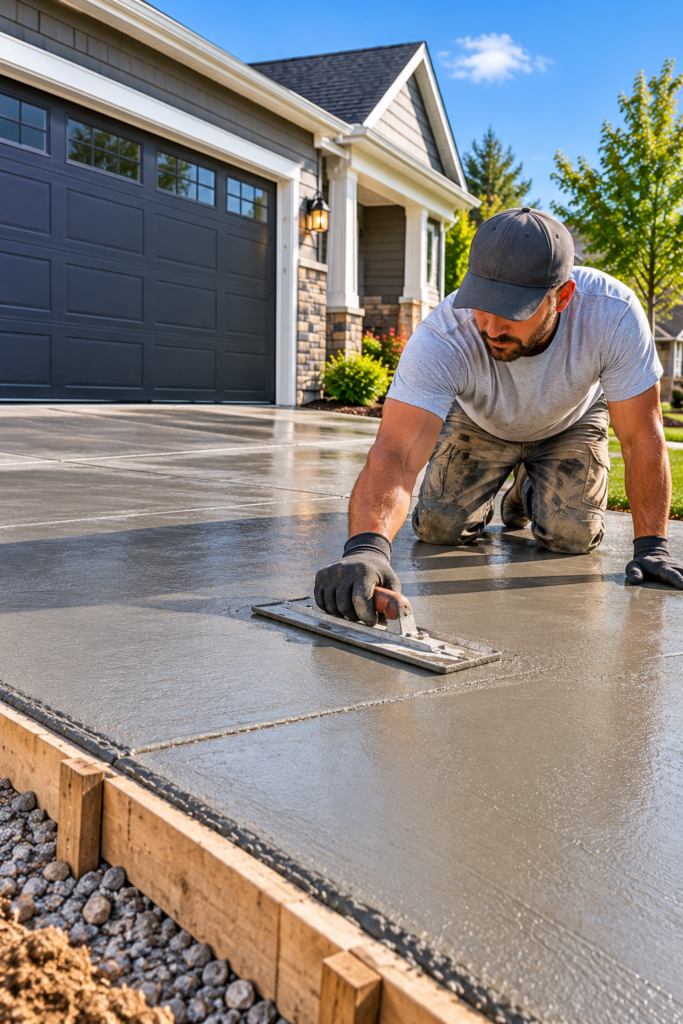
The intended use guides almost every other decision, including size, location, finish and how the area beneath the slab is prepared.
General Concrete Pad
A flat surface for storage, recreation or a work area, sized around how it will be used.
Outdoor Utility Area
A level, stable pad with clear access for bins, a generator or HVAC equipment.
Shed or Small Structure Base
Sized to the structure's footprint and requirements. Some structures need project-specific design.
Equipment Area
Planned around the weight of heavier items and how they will be moved.
A concrete pad that works for one purpose may not suit another. When a slab will carry a building, heavy equipment or vehicles, its design should be based on project-specific information rather than a general rule.
Planning Layers
Planning a Concrete Slab From the Ground Up
This is a way to think about a slab project, not a construction specification. Each layer depends on the one beneath it, starting with the slab's intended use.
Working with an experienced local concrete team helps connect each layer of the plan to your actual site.
Finished Surface
The texture and appearance that suit how the slab will be used.
Concrete Slab
Sized, shaped and planned with joints for its use.
Support Below
The ground beneath and how it is prepared affect how evenly the slab is supported over time.
Site Conditions
Space, layout, existing surfaces, nearby structures and access.
Intended Use
What the slab is for sets the direction for everything above it.
Site Conditions
The Site Matters as Much as the Slab
Grade
The surrounding grade and any low areas affect how water moves around a slab.
Drainage
For outdoor slabs, the goal is usually to keep water from pooling on the surface or collecting along the edges. There is no universal slope or drainage plan.
Moisture
For covered slabs, moisture from the ground below may matter more. The right approach depends on location, use and site. If an existing slab already feels wet, our article on why a concrete slab may be damp explains common moisture sources.
Surrounding Surfaces
A slab should be planned as part of the property, not as an isolated rectangle, including how it meets walkways, structures and other surfaces.
Size and Shape
Dimensions start with the usable area you need plus clearance around it. The footprint of a shed or equipment, connections to walkways or other surfaces and the property layout all play a role.
Anticipated Loads
What Will the Slab Support?
PEOPLE
Foot traffic and everyday use around the property.
STORAGE
Stored items, bins and general outdoor storage.
Think About What Sits on the Slab
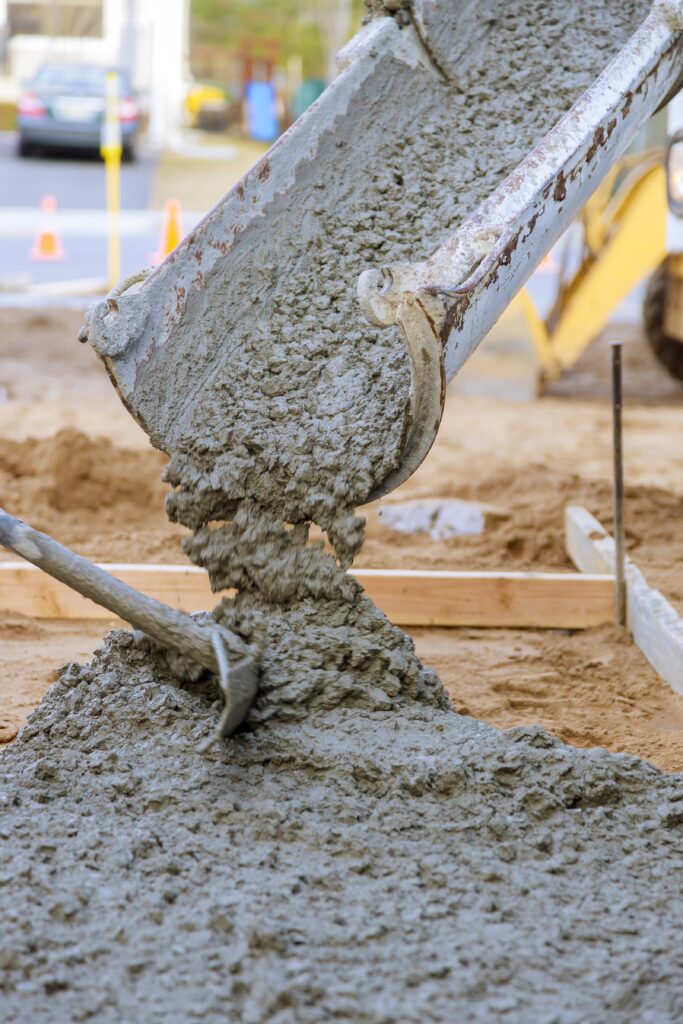
People, stored items, equipment and structures all place different demands on concrete. Requirements such as thickness, reinforcement and base preparation depend on those anticipated loads and the site, so they are set for each project.
EQUIPMENT
Heavier items that need planning around their weight and movement.
STRUCTURES
A shed or small structure, sized to its footprint and requirements.
Exposure
Covered or Exposed?
Where a slab sits changes what it needs. Here is how protected and outdoor slabs compare at a general level.
Covered / Protected
Outdoor / Exposed
Weather
Protected from rain, snow and sun.
Faces rain, snow, sun and freezing temperatures.
Moisture
Moisture from the ground below may matter more.
Surface water and freeze-thaw exposure need attention.
Drainage
Less surface runoff, though the surrounding grade still matters.
Water should not pool on the surface or collect along the edges.
Surface
A smoother finish may suit a covered space.
A textured finish may help outdoors.
Kalamazoo Weather
Concrete Slabs Through Michigan Seasons
Outdoor slabs in Kalamazoo go through warm summers, cold winters, rain and snow. Water that soaks into concrete and freezes expands, and repeated freeze-thaw cycles can wear on exposed surfaces.
Weather also matters during the work. Fresh concrete needs the right moisture and temperature while it cures, and the Federal Highway Administration's curing guide explains why keeping moisture in early helps prevent shrinkage cracking. Cold-weather work may need extra planning so new concrete does not freeze.
Surface
Surface and Finish
Surface finish choices depend on exposure, use and appearance. A textured finish may help outdoors, while a smoother finish may suit a covered space.
Movement
Joints and Movement
Joints are planned into most slabs to help manage where cracks form as concrete moves. They do not prevent all cracking, and their layout depends on the slab's size and shape. Our article on why concrete slabs crack explains the common factors.
Pricing
What Shapes a Concrete Slab Estimate?
Estimates differ because every slab is planned around its own use and site.
New slab or existing concrete? A new slab is planned around its use and site. An existing slab that is damaged, too small or no longer suitable can be evaluated before deciding whether to enlarge or replace it. Our concrete installation page covers new concrete work more broadly.
A project-specific estimate is the clearest way to understand the cost of a concrete slab in Kalamazoo MI.
USE
What the slab must support or hold.
SIZE
Area, shape and design requirements.
SITE
Grade, drainage and existing surfaces.
ACCESS
How equipment reaches the work area.
PREPARATION
Clearing, grading, base work and any slab removal.
FINISH
Surface texture and edge details.
FAQ
Concrete Slab FAQs
Quick answers to common questions about planning a slab. Specific requirements always depend on your project.
What can a concrete slab be used for?
Common uses include shed and small-structure bases, utility pads, equipment areas and general flat surfaces. Each use has its own planning needs. We cover common uses for a concrete slab in more detail in a separate article.
How thick should a concrete slab be?
There is no single answer. Thickness depends on what the slab will support, the site and the project's design requirements.
Does a concrete slab need reinforcement?
It depends on the intended use, anticipated loads, size and site. Reinforcement decisions are made for each project.
Can a concrete slab support a shed or other structure?
A slab can often be planned for a shed or small structure, but it needs to match that structure's size and requirements. Some structures need project-specific design.
Does drainage matter around a concrete slab?
Yes. Water should not pool on an outdoor slab or collect along its edges. The approach depends on the location and surrounding grade.
Can an old slab be replaced?
Often, yes. The existing slab is evaluated and, if it is not suitable, removed so the area can be prepared for new concrete.
Free Estimates
Planning a Concrete Slab?
Tell us what the slab will be used for, the approximate size, where it will go, the site conditions and any existing concrete. Call (269) 404-2457 or contact us to request a free estimate.