
Concrete Steps
Concrete Steps in Kalamazoo MI
Front steps, porch steps and entry steps get used every day and sit outside in every season. Good planning for Concrete Steps in Kalamazoo MI starts with how the steps connect your entrance to the ground below. We help property owners plan new concrete steps and check existing steps that are cracked, worn or uneven.
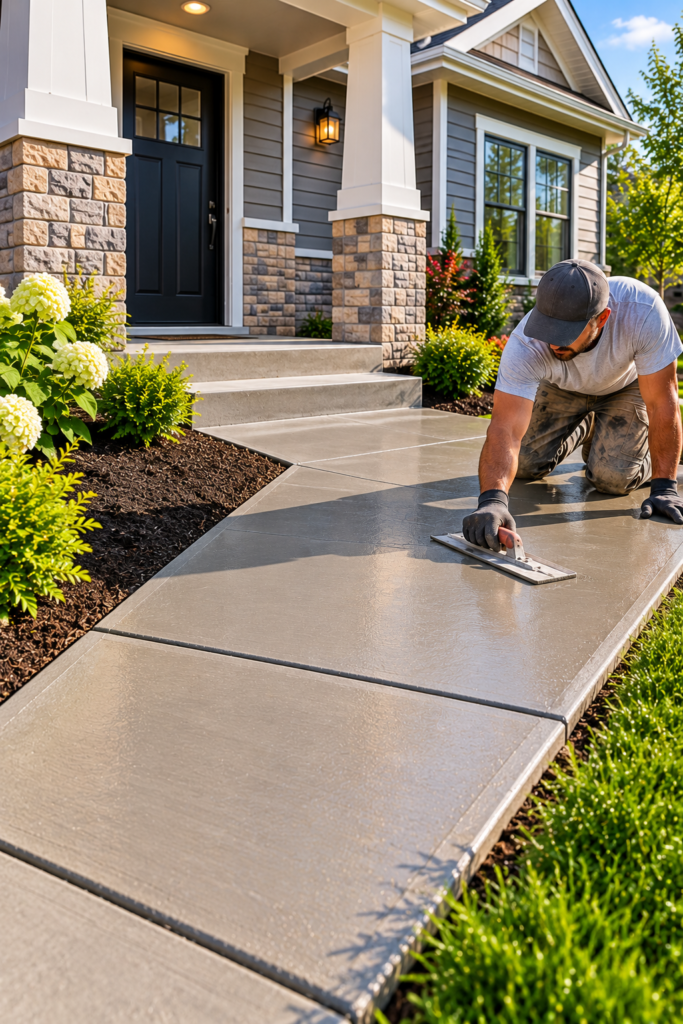
New Steps
Planning New Concrete Steps
New concrete steps start with the change in elevation. The height of the door or porch and where people will walk at the bottom shape the overall layout, the number of steps and whether a landing makes sense.
The surrounding grade and expected use matter too. A busy front entry and a seldom-used back door may call for different planning.
As a local concrete contractor, we look at the entry, the surrounding surfaces and any existing steps before recommending an approach.
Existing Steps
What Are Your Concrete Steps Showing?
Outdoor concrete steps change over time. Here are common things property owners notice. Each is an observation, not a diagnosis.
Cracks
Cracks may appear in the treads, the risers or where the steps meet a porch or walkway. Some are minor. Others need a closer look, especially if they seem to be growing.
Surface Wear and Scaling
Flaking, scaling or a rough, worn surface can show up where foot traffic, water and winter weather meet.
Chipped or Spalled Edges
Step edges take a lot of wear. Chips, broken corners or spalled spots can change how steps look and feel underfoot.
Uneven or Shifting Steps
Steps that tilt, sit lower than before or pull away from the house or porch may point to movement. The cause depends on the site and should be checked in person. We explain possible factors in why concrete steps pull away from a house.
Design Details
Finish, Traction and Code Considerations
Two planning details deserve extra attention on outdoor steps.
Finish and Traction
Surface texture and finish can be considered as part of traction and maintenance planning for outdoor steps.
Handrails and Code Requirements
Step geometry, landings, handrails, guards and accessibility needs can be subject to building codes and local requirements. These depend on the project, so confirm them before work begins. For properties in the city, the City of Kalamazoo building permit information is a helpful place to start.
Connections
Landings and Connections
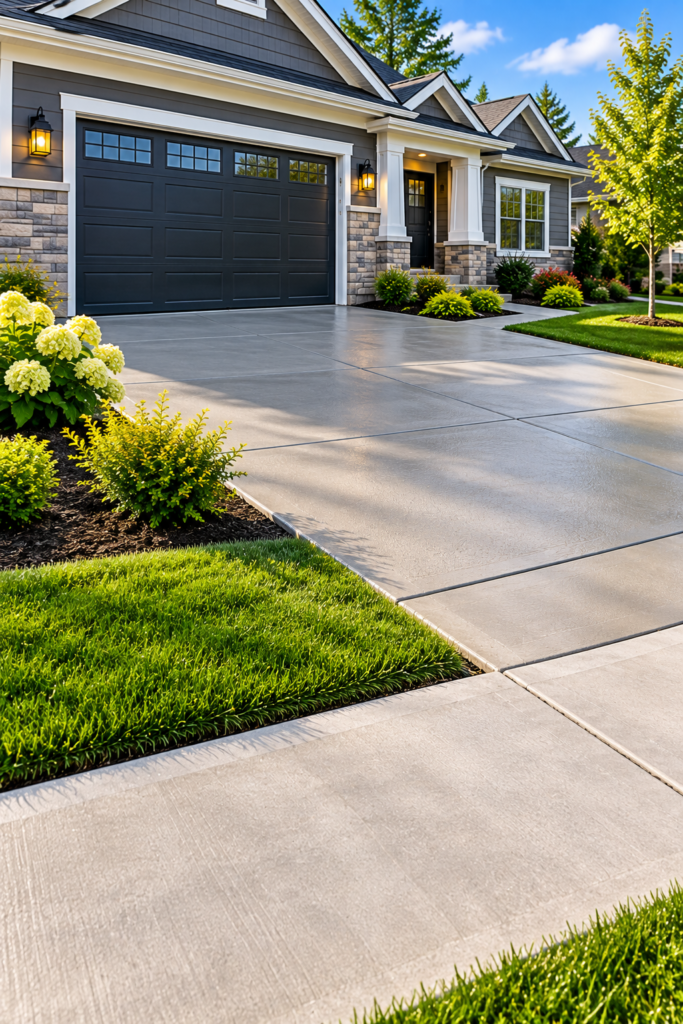
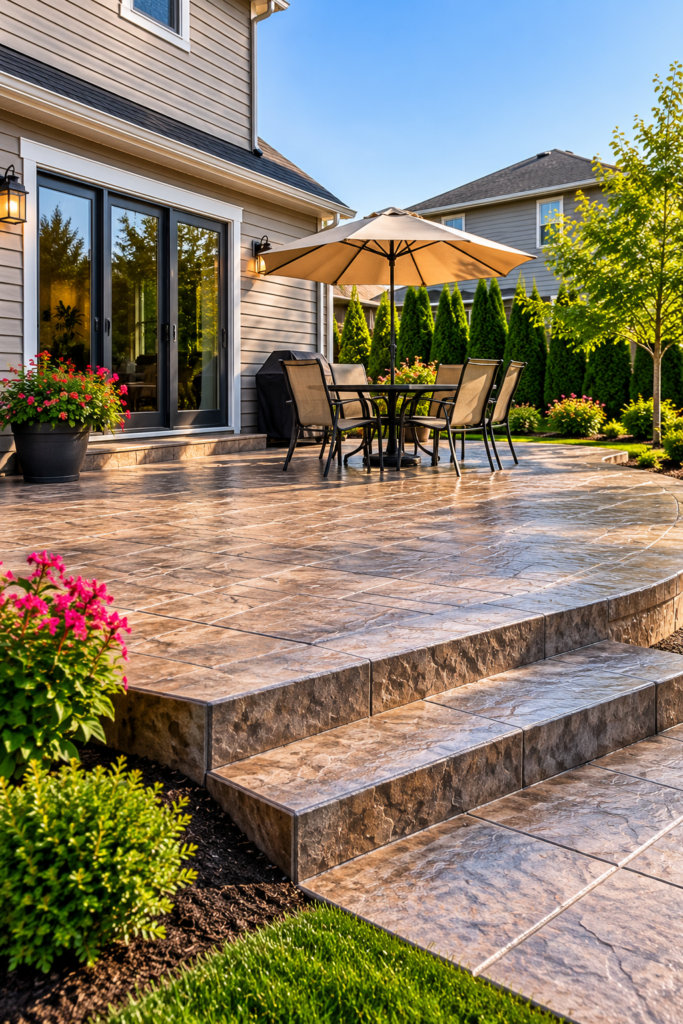
Steps rarely stand alone. They often tie into a porch, walkway, sidewalk or driveway, and clean transitions between those surfaces help with everyday use.
A landing can give people a place to pause, open a door or change direction. Whether one is needed depends on the entry and applicable requirements.
Planning the steps and their connections together helps the whole entry work as one.
Water Management
Drainage and Moisture Around Steps
Exterior steps often sit where roof runoff, sloped yards and walkways meet. Water that collects at the base or along the sides can affect the steps and the concrete around them over time.
Planning looks at where water comes from and where it can go, including the nearby grade and any downspouts close to the entry.
Because every site is different, drainage is reviewed as part of each project.
Local Conditions
Michigan Weather and Outdoor Steps
Freeze-Thaw Cycles
Kalamazoo winters bring repeated freezing and thawing. Water that gets into concrete and freezes can stress the surface over time.
Snow, Ice and Deicers
Shoveling and deicers are part of winter. Some deicers are harder on concrete than others, and newer concrete may be more sensitive in its first winter.
Outdoor Exposure
Steps face rain, snow and sun all year, along with daily foot traffic on the treads and edges.
Caring for Concrete Steps
Clearing snow promptly and keeping water from collecting near the steps are simple habits that can help. Our article on making concrete steps safer in winter shares more ideas.
Repair or Replace
Repair or Replacement?
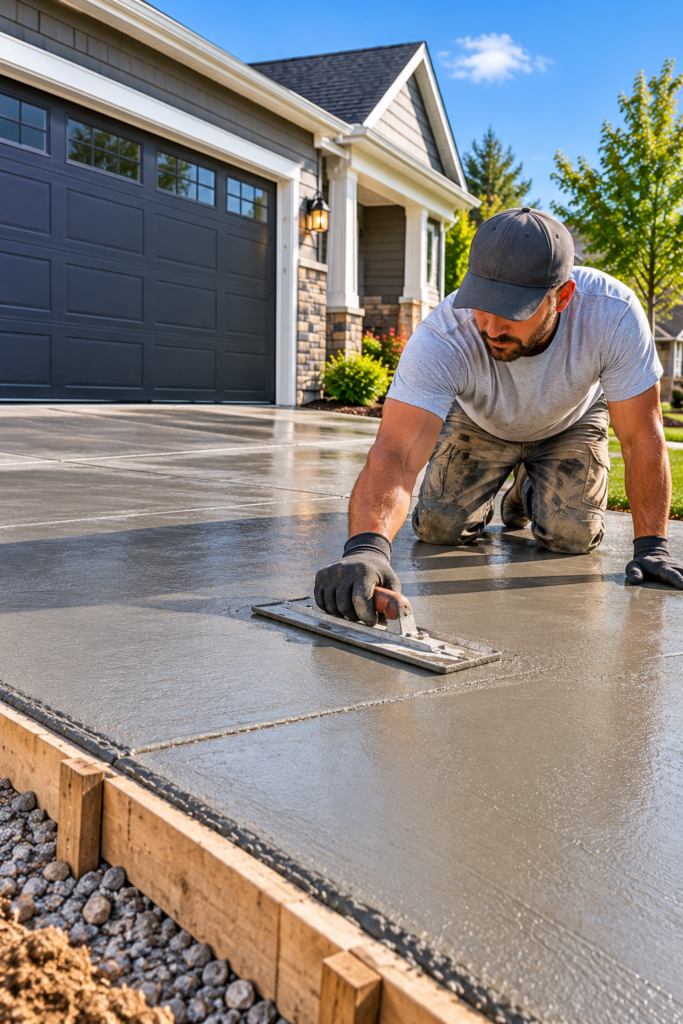
There is no single rule for cracked or damaged concrete steps. The right path depends on the actual condition, how far the deterioration goes, any movement, the surrounding concrete, how the steps are used and the site itself.
Repair may be an option when damage is limited, such as surface wear or a chipped edge, and the steps are otherwise in workable shape. Our concrete repair page explains how we look at damaged concrete on other surfaces, too.
Replacement may be worth discussing when deterioration is widespread, the steps have shifted or settled, or the layout no longer works for the entry. An on-site look helps sort out which approach fits.
Pricing
What Affects a Concrete Steps Estimate?
Number and Size of Steps
More steps, wider steps or a taller rise generally means more material and labor.
New or Existing Steps
Building new steps is different from repairing or replacing steps already in place.
Removal Needs
Taking out old steps adds demolition and hauling.
Landing
Adding or rebuilding a landing changes the scope of the project.
Surrounding Concrete
Tying into a porch, walkway or sidewalk can affect the work.
Site Access
How easily equipment and materials can reach the entry.
Site Conditions
Grade, drainage and nearby landscaping can all play a role.
Finish and Complexity
The chosen finish, step layout and any special details.
Every set of steps is different, so pricing comes from a project-specific estimate.
Planning New Steps or Fixing Old Ones?
Tell us where the steps are and what you would like to change. We will walk you through the options.
FAQ
Concrete Steps FAQs
What should I consider when planning concrete steps?
Start with the entrance, the change in elevation and where the steps will lead. Landings, connections to a porch or walkway, drainage, finish and any applicable code requirements also matter.
Can cracked concrete steps be repaired?
Sometimes. It depends on the type and extent of the cracking, whether the steps have moved and the condition of the surrounding concrete. Some can be repaired; others may be better candidates for replacement.
When should concrete steps be replaced?
Replacement may be worth considering when damage is widespread, the steps have shifted or settled, or the layout no longer suits the entry. An in-person look should guide that decision. Our article on when concrete steps should be replaced covers the signs in more detail.
Can new concrete steps connect to an existing porch or walkway?
Often, yes. How the steps tie in depends on the existing porch or walkway, its condition and the height between surfaces.
Do concrete steps need a handrail?
It depends. Handrail, guard and landing requirements can vary by project and by local building requirements. Confirm what applies before work begins.
How does Michigan weather affect concrete steps?
Moisture, freezing and thawing, snow, ice and deicers can all affect exterior concrete over time. Good drainage and regular winter care can help.
Free Estimates
Request a Concrete Steps Estimate
Share where the steps are, whether they are new or existing, the approximate number of steps and any visible condition issues. Let us know how they connect to a porch, walkway or entry, the finish you want and your project goals. Call (269) 404-2457 or use our contact page.