
Concrete Slab Installation
Concrete Slab Installation in Kalamazoo MI
A solid slab starts long before the pour. Concrete Slab Installation in Kalamazoo MI begins with understanding how you plan to use the slab and what the existing site looks like today.

Planning a New Concrete Slab Starts With the Site
Every new concrete slab project starts with three questions. What will the slab be used for? What is there now? And how will crews and materials reach the work area?
A pad for a shed, a spot for trash bins and a base for equipment can each call for different planning. Existing ground, grade, nearby surfaces and the way water moves across the area all matter, while gates, fences, landscaping and tight side yards can affect how the project is planned.
Still deciding what your slab is for? See our concrete slab page for common slab uses and early planning.
Intended Use
Site Conditions
Project Access
Site Review
Preparing the Area for a New Concrete Slab
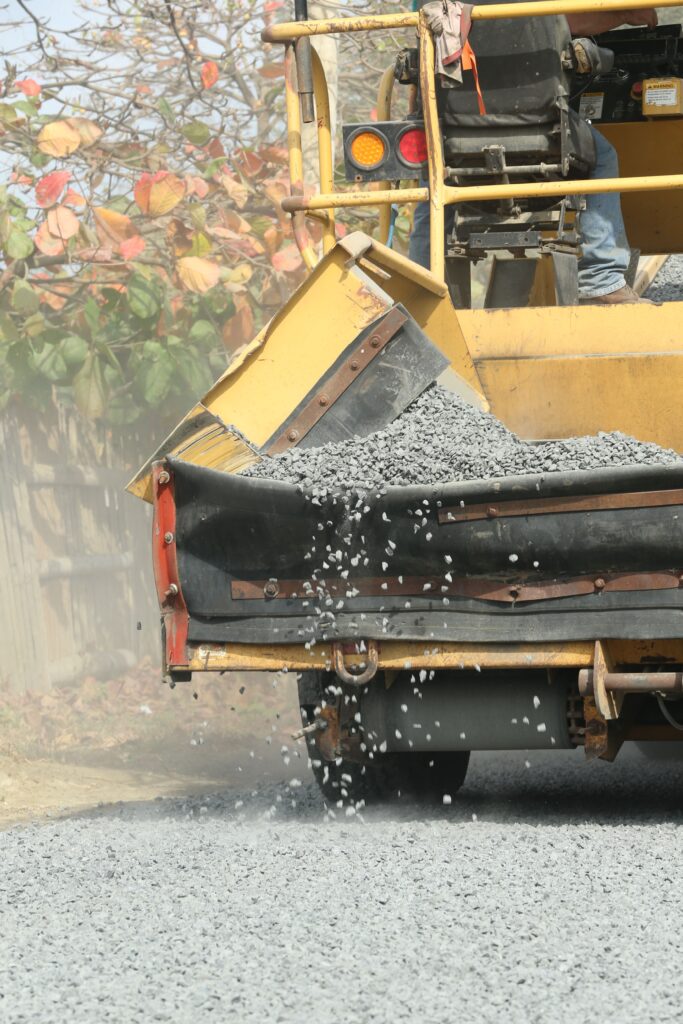
A site review looks at the ground as it is today. We note where the slab will go, how much room is available and how it will sit next to your home, garage, fences or existing concrete.
Grade and drainage get close attention. If water already collects in a low spot, a new slab can change where that water goes. Existing surfaces matter too, since the new slab should meet them cleanly.
These conditions shape how the area is prepared, how the slab is laid out and what the estimate includes.
The Process
How Concrete Slab Installation Comes Together
Each stage builds on the one before it. Here is the general path from bare ground to a finished slab.
01
Planning the Slab
We confirm the slab’s purpose, approximate size and location, and review site conditions.
02
Preparing the Site
The project area is readied with attention to the ground below, grade and drainage. The exact work depends on existing conditions and intended use.
03
Establishing the Layout
Slab boundaries and concrete forms are set so the shape, dimensions and edges match the plan. Layout also sets how the slab meets nearby surfaces.
04
Placing the Concrete
Fresh concrete is placed into the prepared, formed area. Timing depends on project size, site access and the weather.
05
Finishing the Surface
The surface is worked to a texture that suits how the slab will be used, and control joints are planned as part of the work.
06
Curing and Early Protection
The new slab is protected while it continues to gain strength. We give project-specific guidance on when it can be used.
Support Conditions
Why Site Preparation Matters
A concrete slab is only as steady as what supports it. The subgrade and the prepared support below the slab help it stay stable over time.
Support needs depend on actual site conditions and how the slab will be used. Drainage and moisture also matter, since water under or around a slab can affect how it performs. Moisture planning can also include deciding whether a vapor barrier belongs under the slab.
No one-size-fits-all specs
Thickness, base preparation and reinforcement depend on the project, its intended use and any applicable requirements. We explain when a slab may need rebar or wire mesh in a separate article.
Installation Day
Concrete Placement
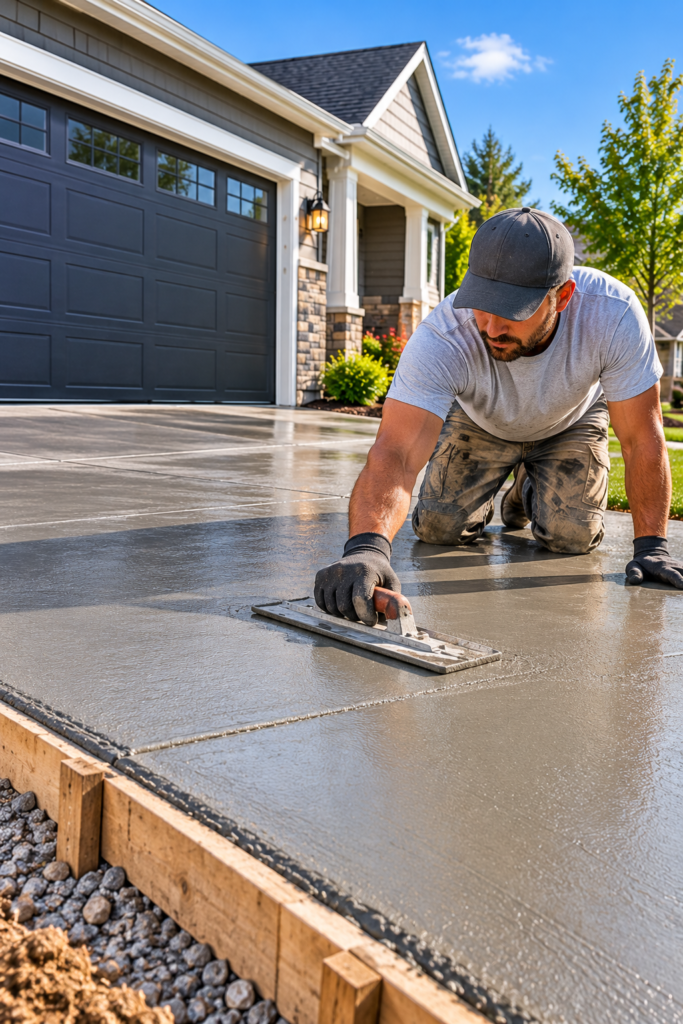
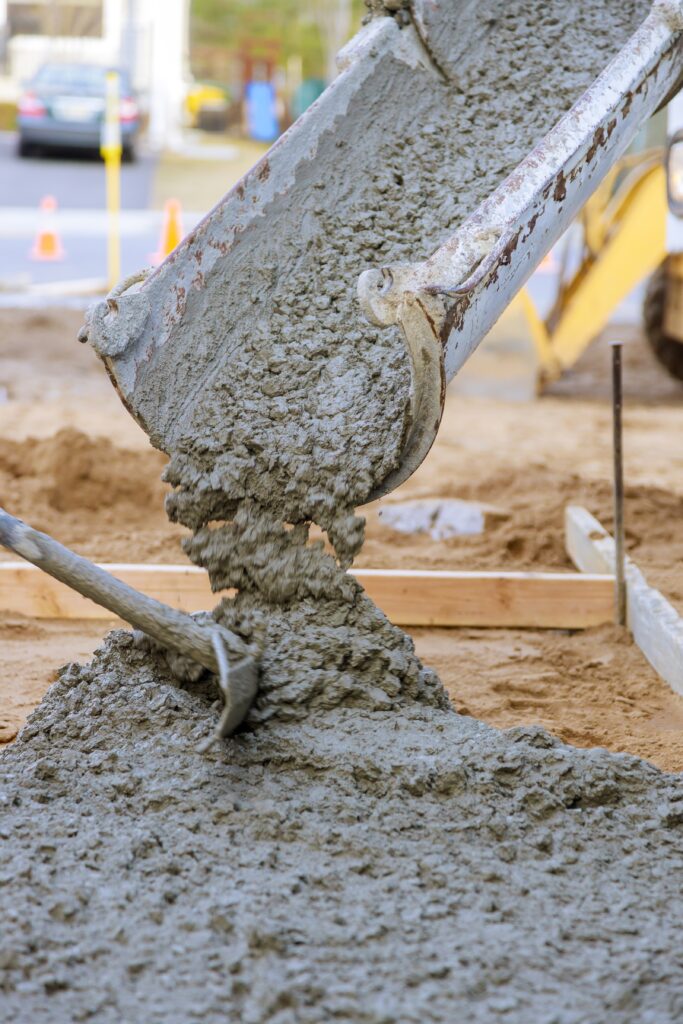
Once the area is prepared and the forms are set, concrete placement can begin. Project size, site access, weather, concrete design and the intended finish all shape the plan for pouring concrete.
Surface Finish
Finishing the Surface
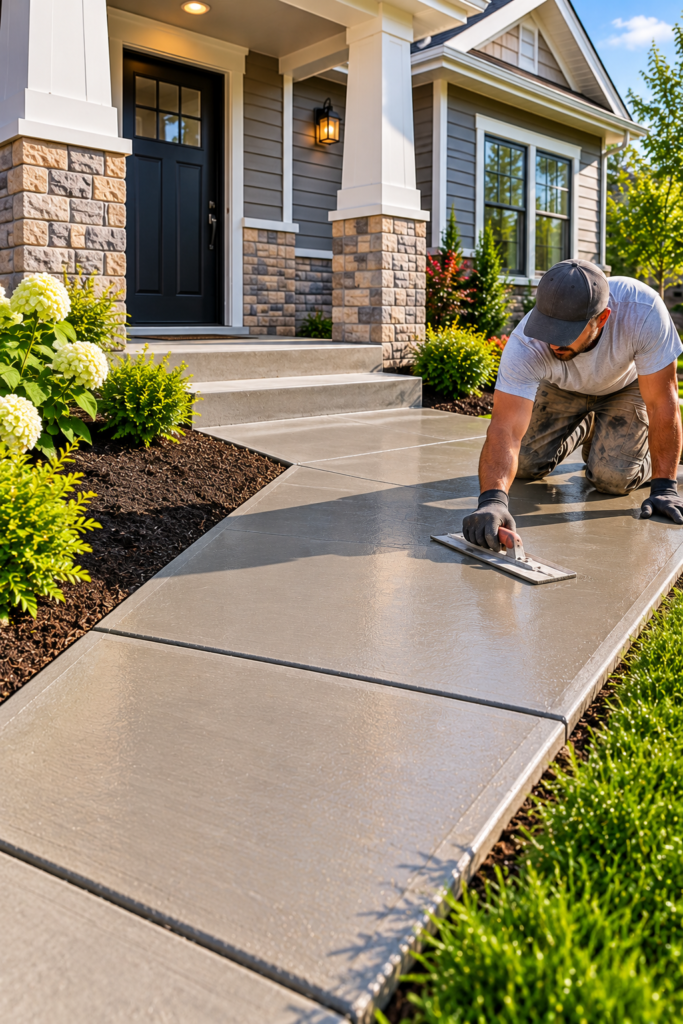
Concrete finishing sets the final look and feel of the surface. Outdoor slabs often get a simple broom finish for texture.
The right surface finish depends on intended use, exposure and any nearby concrete.
What Happens After Placement?
Joints and Expected Movement
Concrete moves as it dries and as temperatures change, and it may crack. Control joints are commonly planned to help guide where cracking is more likely to occur. They do not prevent every crack, and their layout depends on the slab’s size and shape.
Curing and Early Protection
Concrete keeps gaining strength after placement. Curing helps it hold enough moisture early on, and early protection guards it from traffic, weather and damage. When you can use the slab depends on the concrete design, weather, site conditions and intended use, so we give project-specific guidance.
Michigan Conditions
Installing Outdoor Concrete Through Michigan Weather
Kalamazoo sees warm summers, cold winters, rain and snow. Those seasonal changes matter during concrete work, not just after it.
Fresh concrete needs suitable moisture and temperature while it cures. Very hot, dry, cold or wet days can affect placement and the hours that follow, so Michigan weather often shapes scheduling.
Freeze-Thaw, Snow and Deicers
Once in use, outdoor concrete faces freeze-thaw cycles, snow, ice and deicers. Federal Highway Administration research notes that this damage often appears near joints and cracks, where moisture is more available. That is one reason drainage and joint planning get attention early.
Planning and Pricing
What Affects a Concrete Slab Installation Estimate?
Every slab is priced on its own details, not on averages or per-square-foot figures.
Size
Slab dimensions and shape.
Intended Use
What the slab needs to support day to day.
Site Access
How crews and materials reach the work area.
Site Preparation
Grading and readying the area and the support below.
Drainage
How water moves around and away from the slab.
Finish
The surface texture and any design complexity.
Existing Concrete
Whether old concrete must be removed first.
Project Conditions
Weather, ground conditions and project requirements.
A new slab installation places concrete in an area that has not had a slab before. Slab replacement is different: the existing concrete may first need removal and a fresh look at the site before new concrete goes in.
As part of our concrete services in Kalamazoo, we can walk the site with you and explain each stage of Concrete Slab Installation in Kalamazoo MI before any work is scheduled.
Common Questions
Concrete Slab Installation FAQs
What happens during concrete slab installation?
Most projects move through planning, site preparation, layout and forms, concrete placement, finishing, joints and curing. Details depend on the site and intended use.
How is the site prepared for a concrete slab?
Preparation focuses on readying the project area and the support below the slab, with attention to grade and drainage. The exact work depends on existing ground conditions and how the slab will be used.
How thick should a concrete slab be?
There is no single answer. Thickness, reinforcement and base preparation depend on intended use, expected loads, site conditions and any applicable requirements, so we review them for each project. Our article on what decides slab thickness explains these factors.
Why are joints used in concrete slabs?
Concrete moves as it dries and as temperatures change. Control joints are commonly used to help guide where cracks are more likely to form. They help manage cracking but cannot prevent every crack.
How long before a new slab can be used?
It depends on the concrete design, weather, site conditions and what the slab will carry. We provide project-specific guidance.
How does Michigan weather affect slab installation?
Heat, cold, rain and freezing temperatures can affect placement and early curing, so weather often affects scheduling. Outdoor slabs also face freeze-thaw cycles and deicers over time.
Planning a New Concrete Slab?
Tell us about the planned use, approximate size, location and existing site, along with access and your project goals. We will talk through next steps and prepare a project-specific estimate.