Commercial Concrete
Commercial Concrete in Kalamazoo MI
Concrete at a business property has to work for customers, employees, deliveries and daily operations. Commercial Concrete in Kalamazoo MI can involve new installation, repair, replacement and upkeep of entrances, sidewalks, slabs and other exterior areas. The right approach depends on how each area is used, the condition of existing concrete and how the work fits around normal activity on the property.
The Basics
What Commercial Concrete Covers
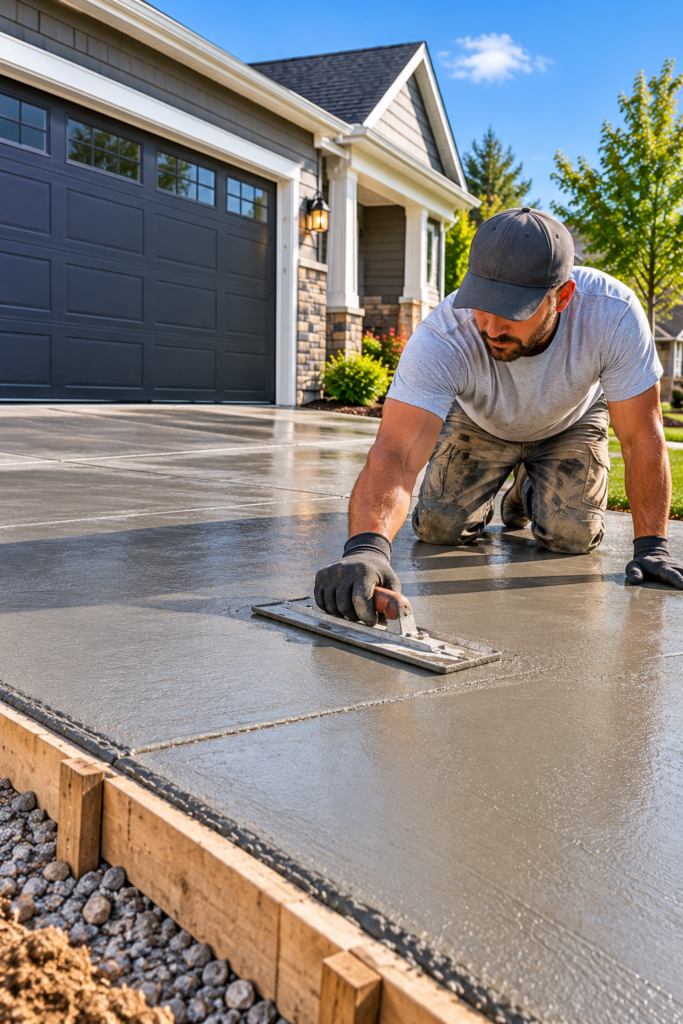
Commercial concrete includes the concrete surfaces at offices, retail properties, managed properties, multifamily common areas and other non-residential sites. Typical areas include entrances, sidewalks, pedestrian walkways, slabs, floors and service areas.
Each area serves a different purpose, so planning starts with how it is used, who uses it and what condition the existing concrete is in.
As concrete contractors serving Kalamazoo businesses, we help property owners and managers sort out which type of work fits the site.
Our Services
Concrete Services for Commercial Properties
Entrances and Sidewalks
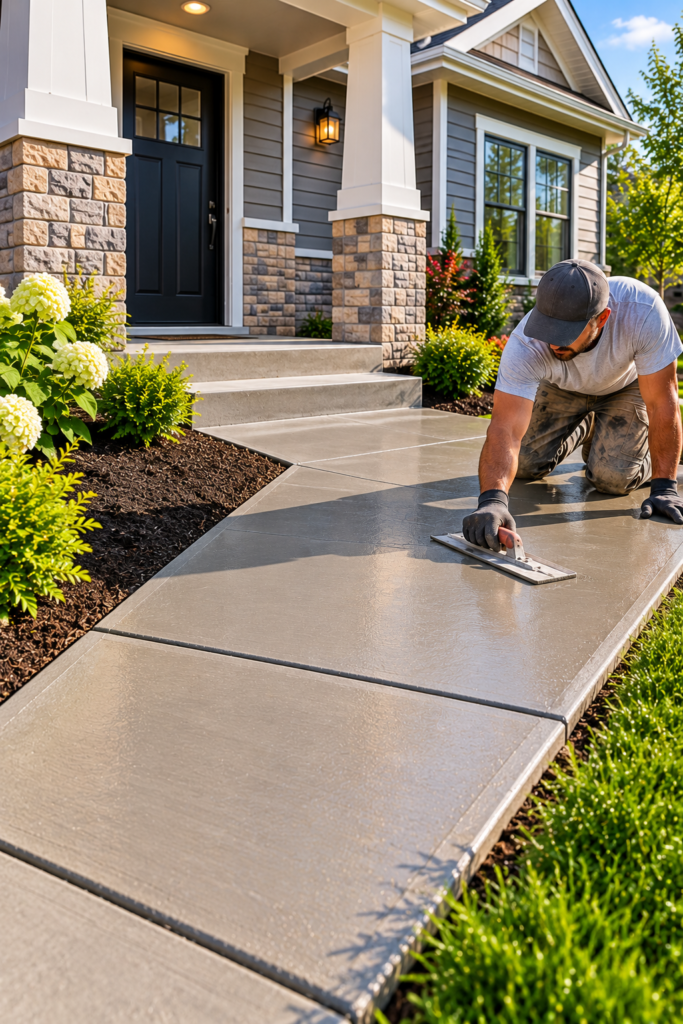
Entries, sidewalks and pedestrian walkways carry customers and staff every day. Even surfaces and smooth transitions matter, and accessibility needs may apply.
Slabs, Floors and Work Areas
Concrete slabs, floors and service areas are planned around their actual use, from foot traffic to equipment or vehicles.
Repair and Existing Concrete
Cracked, worn or uneven areas may call for concrete repair, resurfacing, leveling or replacement, depending on conditions.
Cutting and Removal
Some projects need sections cut or removed before new work begins. Learn more about concrete cutting.
Planning
Planning Commercial Concrete Work
Commercial projects have to fit around the people and activity on site, as well as the drainage, grading and surfaces already in place. Early planning helps avoid surprises once work begins.
Use and Traffic
Pedestrian routes, entrances, vehicle-use areas and service areas each have different needs. The concrete design depends on the intended use, so details like thickness and reinforcement are set for the specific project.
Access and Phasing
Planning may consider customer and employee access, delivery routes and how work areas are separated from normal property use. Some projects can be sequenced in phases so parts of the site stay open.
Existing Concrete
Signs to Watch on Existing Concrete
Property owners and managers often notice cracks, surface deterioration, scaling or spalling, worn walking surfaces, damaged edges or uneven sections.
Low spots that hold water and areas that seem to have shifted are also common observations. Raised edges between panels on busy walkways are worth noting too.
These are observations, not diagnoses. The cause depends on the site and the concrete, so it should be checked in person.
Your Options
Repair, Resurfacing, Leveling or Replacement
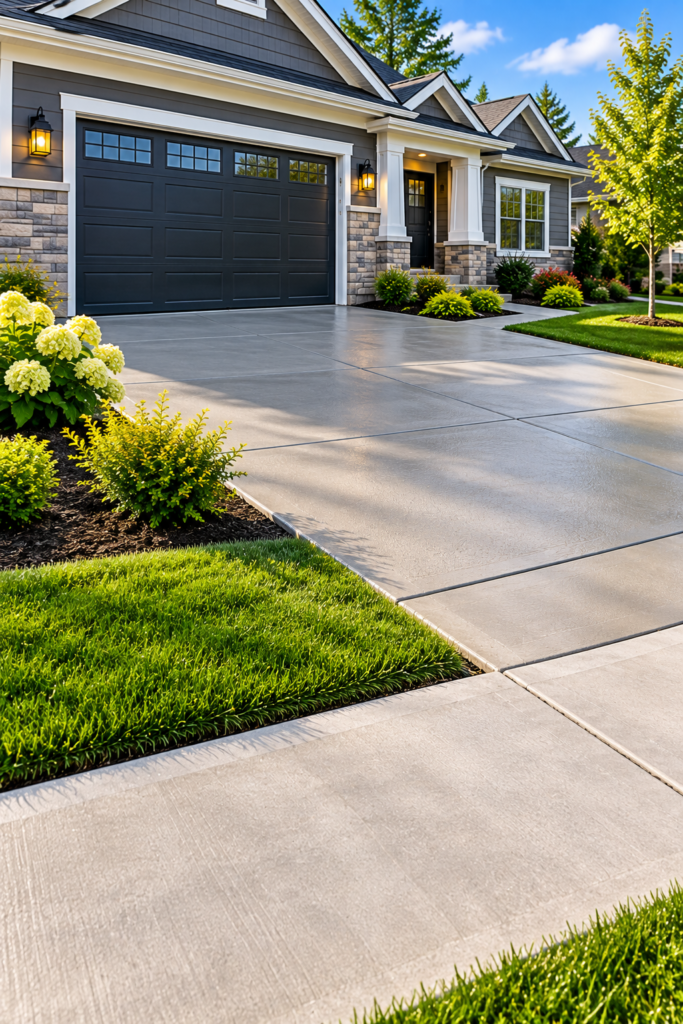
Repair may address specific defects, such as a damaged edge or an isolated crack. Resurfacing may renew the surface of suitable existing concrete that is otherwise stable.
Leveling may address height differences in suitable existing concrete, such as a sunken sidewalk panel. Replacement may be considered when existing concrete is no longer suitable for the project.
Resurfacing and leveling do not fix underlying site or structural problems, and no single crack size decides the answer. The right approach depends on actual conditions.
Local Conditions
Commercial Concrete in Michigan Weather
Freeze-Thaw Cycles
Water that soaks into concrete and then freezes can stress exterior surfaces over repeated winters. Entrances and shaded walkways may stay wet longer than open areas.
Snow, Ice and Deicers
Plowing, shoveling and deicing materials are part of keeping walkways and entrances open, and they add to surface wear over time.
Drainage and Grading
Runoff, surrounding grade, low areas and connections to adjacent surfaces all affect how exterior concrete holds up.
Ongoing Maintenance
Regular walk-throughs to note new cracks, uneven panels or areas that hold water make it easier to plan repairs before they affect daily use. Clearing snow promptly also helps keep pedestrian routes usable. Our guide on what property managers should look for in commercial concrete can help structure those reviews.
Accessibility
Accessibility and Pedestrian Routes
Accessibility often matters on commercial properties, especially at entrances, sidewalks and routes between parking areas and the building.
Federal rules such as the 2010 ADA Standards for Accessible Design set requirements for many facilities. Which requirements apply depends on the property, the project and local rules, so they should be confirmed during planning.
This page is general information, not legal advice. Concrete work can be planned with those requirements in mind once they are identified.
Pricing
What Affects a Commercial Concrete Estimate?
Project Type
Entrances, sidewalks, slabs, floors or service areas.
Project Size
The overall area involved.
Intended Use
Pedestrian traffic, vehicles or equipment.
Existing Condition
The state of any concrete already in place.
Removal and Preparation
Cutting, removal and base work before new concrete.
Site Access
How easily equipment can reach the work area.
Drainage
Grading or water management the site needs.
Phasing and Complexity
Sequencing around property use and project details.
Every commercial property is different, so pricing comes from a project-specific estimate. We outline what affects the cost of a commercial concrete project in a separate article.
Planning Concrete Work at Your Property?
Tell us about the site and the area you want to address.
FAQ
Commercial Concrete FAQs
What types of commercial concrete projects can be completed?
Common projects include entrances, sidewalks, pedestrian walkways, slabs, floors and service areas, along with repair, resurfacing, leveling, cutting and replacement of existing concrete.
What should be considered before starting a commercial concrete project?
Think about how the area is used, pedestrian and vehicle movement, site access, drainage, accessibility needs and how the work will fit around normal property use.
Can damaged commercial concrete be repaired?
Often, depending on the type and extent of the damage and whether the concrete has moved. Some areas can be repaired; others may be better candidates for replacement.
Can uneven commercial concrete be leveled?
Leveling may help when suitable concrete has shifted in height. Whether it fits depends on the condition of the concrete and the site.
How can concrete work be planned around property access?
Planning can look at customer and employee routes, deliveries and which areas need to stay open. Some projects can be divided into phases, depending on the site. Our article on planning concrete work around business operations goes into more detail.
How does Michigan weather affect commercial concrete?
Moisture, freeze-thaw cycles, snow, ice and deicing materials can all affect exterior concrete over time. Good drainage and regular maintenance can help.
Free Estimates
Request a Commercial Concrete Estimate
Tell us the property and project type, the concrete area involved, whether it is new or existing, the approximate size and its current condition. Share how people and vehicles use the area, any access concerns and the outcome you want. Call (269) 404-2457 or use our contact page.